
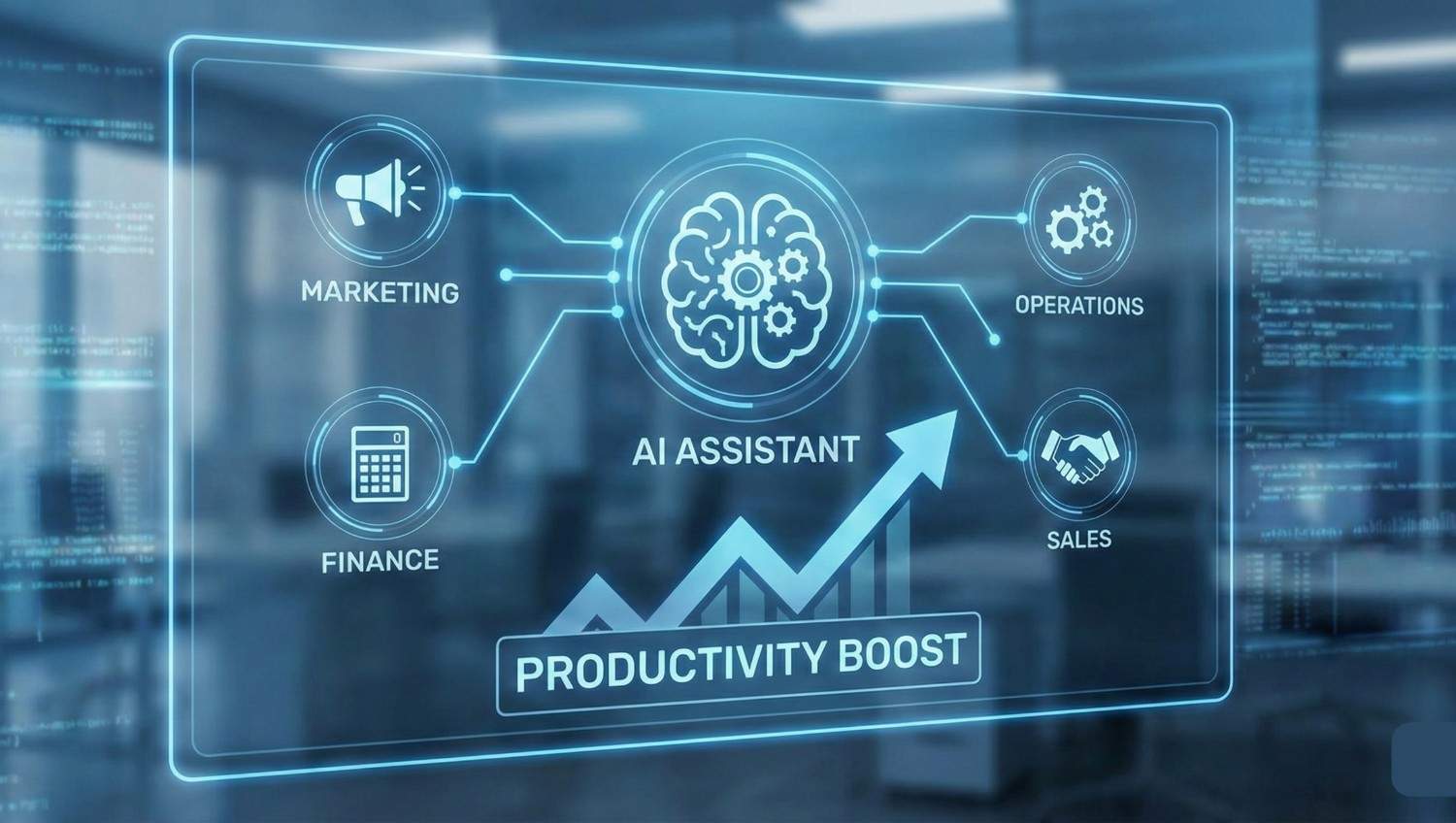
For years, enterprise technology conversations have focused on automating away manual work. Today, the conversations are increasingly centered around business automation powered by agentic AI, where systems act autonomously and with intent and context. In that sense, Lenovo’s unveiling of the ThinkSystem servers for AI inferencing is a natural evolution. It is an example, specifically, of how AI automation for business is going beyond scripted workflows to become more intelligent systems that reason, respond and act autonomously in real time. This is a similar evolution to AI systems in Agent Bheem, where the systems are meant to act as decision-makers instead of tools.
From Workflow Automation to Agentic AI
Traditional workflow automation relies on rule based systems. While these approaches handle repetitive tasks well, they cannot manage the complexity of modern business environments. Today, however, organizations are shifting toward agentic AI, where AI agents for business actively observe data, infer meaning, make decisions, and act autonomously across real-world systems
This transformation depends on AI automation for business that operates continuously not only during model training, but also throughout real-time inference. As companies scale intelligent systems, business automation must stay active at the exact moment decisions are needed, enabling faster responses and stronger operational resilience.
When companies deploy autonomous AI systems, timing is critical. From the moment data is generated, milliseconds matter. Delayed insights fail real time analytics and inference must happen where data originates, not after it reaches distant clouds.
Lenovo designed its ThinkSystem servers for this need. Edge ready compute nodes reduce the gap between sensor and decision engine, enabling GPU powered inference on-premises or at cell towers. This infrastructure delivers the real-time responsiveness Agent Bheem and similar agentic AI systems requiredecisions made instantly, not after the moment has passed.
The Emerging Role of AI Business Assistants in Enterprises
Today, an AI assistant does more than answer questions or generate reports. In advanced deployments, an AI business assistant becomes an operational layer,coordinating processes, triggering actions, and improving outcomes across functions.
When combined with AI intelligence and business context, platforms such as Agent Bheem, in turn, evolve into autonomous assistants that execute strategy, reduce friction, and increase organizational agility.
Imagine a business agent that never sleeps. It monitors dashboards, detects demand shifts, adjusts supply chains, dispatches orders, and verifies results then repeats the cycle. Each step depends on real-time inferencing.
If the inferencing layer is slow, unreliable, or insecure, the loop fails and autonomous operations break down. Scaling AI across the enterprise is not just a data science challenge,it is an infrastructure challenge.
Lenovo is acknowledging to the fact by introducing the new ThinkSystem . By delivering compute, storage, and networking purpose built for low-latency, always-on inference, the line gives agents like Agent Bheem.
Agent Bheem: The Agentic AI Powerhouse Built for Real-World Processes
Why Inferencing Infrastructure is Important
- Agentic systems have continuous feedback loops:
- Observe business signals
- Pattern match with AI business intelligence
- Decide next action
- Act through automated workflows
The Next Stage of Business Automation Is Agentic
ThinkSystem servers for AI inferencing are not just a hardware upgrade. They symbolize the emergence of an era of AI agents for business that integrate workflow automation, real time analytics and AI intelligence into a single coherent system.
Business automation is not just about doing more efficiently. It is about creating intelligent systems that are context-aware, continuously learning, and are purposeful, as embodied by Agent Bheem in the real world of business